Dark red + blood clots
If your uterus doesn't contract well and sheds blood quickly, it can cause blood to stay in the uterus and clump together, forming clots. Clots can be tiny or big, but they are usually a deep red color.What does dark red period clots mean?
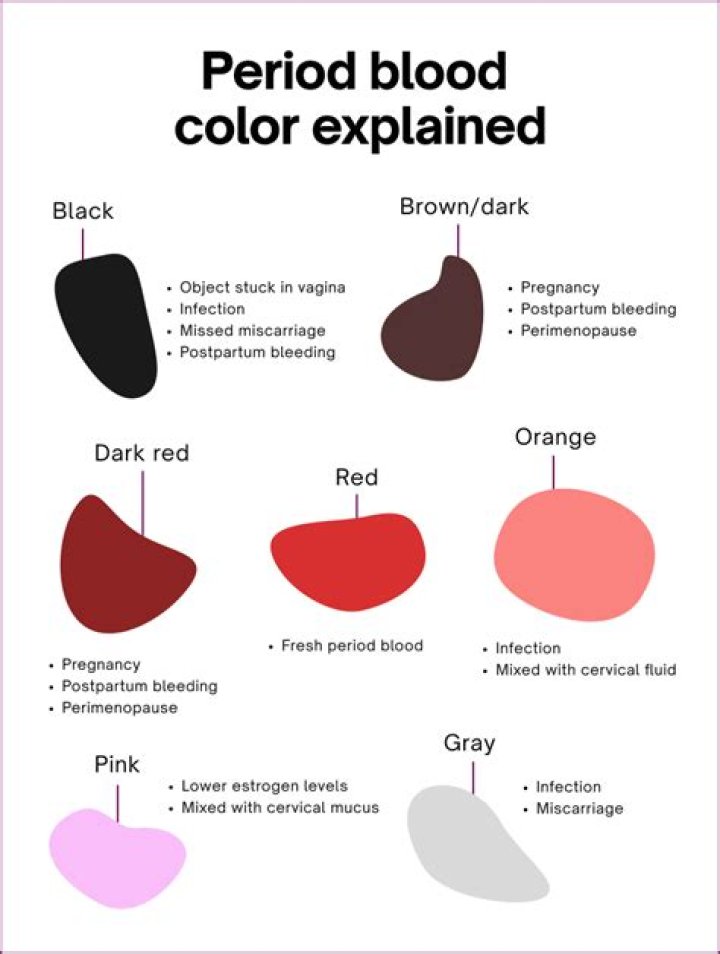
This just means that your blood is fresh and has not been in the uterus or vagina for some time. Dark red blood: Dark red blood is simply blood that has been in the vagina for longer. It can even be seen with blood clots. Clotting is also considered normal unless the clots are larger than the size of quarters.
What does big blood clots in period mean?
Blood can coagulate in the uterus or vagina at any time throughout your period, just as it does to seal an open wound on your skin. Then, when it passes during menstruation, you see clots. But large clots, such as those that are bigger than a quarter, may indicate the presence of uterine fibroids.
When should I be concerned about blood clots in my period?
If you need to change your tampon or pad after less than 2 hours or you pass clots the size of a quarter or larger, that is heavy bleeding. If you have this type of bleeding, you should see a doctor. Untreated heavy or prolonged bleeding can stop you from living your life to the fullest.
Why is my period blood darker?
You may see dark red blood upon waking during your period or after you've been lying down for a while. The deep color may simply mean that the blood has been sitting in the uterus for a while but hasn't oxidized to the point of turning brown.
What Causes Blood Clots During Periods (Menstruation)? | Her Body
Why does my period look like jelly?
A. If you notice on heavy days of your period that blood seems extra-thick, and can sometimes form a jelly-like glob, these are menstrual clots, a mix of blood and tissue released from your uterus during your period. They can vary in size and color, and usually, they are nothing to worry about.
Can stress cause blood clots in period?
Any type of stress (physical or emotional) can cause the release of stress hormones in the body. This can cause hormonal imbalance that may lead to heavier bleeding and clots.
Why is my blood dark and thick?
Thick blood is caused by heavy proteins, or by too much blood in the circulation. Too many red cells, white cells, and platelets will result in blood thickening. Another cause is an imbalance in the blood clotting system.
What your period color says about your fertility?
Pale Red or Pink. You need enough density of red blood cells to make healthy blood. If your menstrual blood is watery or pink, you may have difficulty making enough red blood cells or they may not contain enough iron.
What are signs you can't get pregnant?
The main symptom of infertility is the inability to get pregnant. A menstrual cycle that's too long (35 days or more), too short (less than 21 days), irregular or absent can mean that you're not ovulating. There might be no other signs or symptoms.
Do heavy periods mean you are more fertile?
Heavy periods may indicate an underlying condition affecting fertility. Some women experience a few days of light flow, while others regularly experience heavy periods and painful cramps.
Can you get a full period and still be pregnant?
The short answer is no. Despite all of the claims out there, it isn't possible to have a period while you're pregnant. Rather, you might experience “spotting” during early pregnancy, which is usually light pink or dark brown in color.
Does Dark blood mean dehydration?
When you're dehydrated, your kidneys tell your body to retain water. That means you have less water in your urine, which causes it to become darker in color. In general, the lighter the color of your urine, the more hydrated you are.
How do I stop my period from clotting?
Medical therapy for menorrhagia may include:
- Nonsteroidal anti-inflammatory drugs (NSAIDs). NSAIDs, such as ibuprofen (Advil, Motrin IB, others) or naproxen sodium (Aleve), help reduce menstrual blood loss. ...
- Tranexamic acid. ...
- Oral contraceptives. ...
- Oral progesterone. ...
- Hormonal IUD (Liletta, Mirena).
What are the 5 signs of dehydration?
What are the symptoms of dehydration?
- Feeling very thirsty.
- Dry mouth.
- Urinating and sweating less than usual.
- Dark-colored urine.
- Dry skin.
- Feeling tired.
- Dizziness.
Does thick blood make you tired?
Thick blood can lead to strokes or tissue and organ damage. Symptoms include lack of energy (fatigue) or weakness, headaches, dizziness, shortness of breath, visual disturbances, nose bleeds, bleeding gums, heavy menstrual periods, and bruising.
Why is my blood so thick?
When blood is thicker or stickier than usual, this often results from an issue with the clotting process. Specifically, an imbalance of the proteins and cells responsible for blood clotting can lead to hypercoagulability.
Is it my period or am I pregnant?
Pregnancy-specific symptoms
“The key difference between the two, however, is that with pregnancy, your period doesn't occur.” Nausea is also a symptom that can accompany pregnancy and is often not experienced with PMS. “The nausea in early pregnancy often resolves after the 12th week of gestation, “Giles said.
Can you bleed like a period in early pregnancy?
With so much happening, first trimester bleeding is common. According to one large 2009 study, 30 percent women have spotting or light bleeding in the first trimester. This can be a very normal part of early pregnancy. Many women experience some bleeding and go on to have healthy pregnancies.
Can someone be pregnant without knowing?
Some women don't know they're pregnant simply because they don't have any symptoms. No low back pain, no pelvic cramping and no nausea – they feel completely fine and like their typical selves. No pronounced “bump.” It's no secret that obesity is an epidemic in the United States.
What color is a healthy period?
Healthy period blood typically varies from bright red to dark brown or black. Blood or discharge that is orange or grey may indicate an infection.
Do your eggs come out during your period?
Once she starts her periods, 1 egg develops and is released during each menstrual cycle. After ovulation, the egg lives for 24 hours. Pregnancy happens if a man's sperm meet and fertilise the egg.
How many eggs do you lose on your period?
After a woman starts her menstrual cycle, one egg is ovulated and about 1,000 (immature) eggs are lost each month.
What's the quickest way to get pregnant?
Experts say the best way to get pregnant fast is to have sex once a day, every other day, during the fertile window right before and after ovulation. If you have sex too often, your partner's sperm count may be reduced, and if you don't have enough sex, the sperm may be old and unable to swim as fast.
How long should you keep sperm inside to get pregnant?
Some experts do recommend staying in bed anywhere from 20 minutes to an hour after intercourse to keep the sperm pooled at the top of the vagina.